

The Week of Prayer for Christian Unity
A note about the “Week of Prayer for Christian Unity” and Ecumenism:
That there are factions, divisions, and separation in the Body of Christ—the Church—ought to trouble us deeply. The simple fact that we do not gather with our brothers and sisters from across the Faith is scandalous and has been an obstruction to those outside the Christian Faith who would believe, since the earliest days of the Christian Faith. Especially offensive is the fact that, all too often, we refuse to gather with our brothers and sisters, not because we have honest and substantive differences between us, but because our lack of charity (love) or because we have come to distrust others based off of more “trivial” matters of personal preferences, power, or greed. We ought to soberly reflect on the roots of our divisions and honestly confess where we have allowed our sin to divide us and keep us apart.
However much we might desire a full, visible, and organic Unity within the Church, however, honest differences yet remain. The work of Ecumenism—the work of restoring the visible unity of the Church—cannot “paper-over” nor ignore these divisions. Among Christians there are simply differences in terms of Sacraments, ecclesiology, theology, and even the polity (structure) of the Church. Where honest and deep differences of confession exist, we must pray for a growth of Charity of both our Lord Jesus Christ and our brothers and sisters, so that we may learn and respect both what “we” believe, but also what “they” believe. This differs from simple “tolerance” because we are not merely accepting a “status quo” of division, nor are we being indifferent to those who differ from us, but rather we are rooted in the hope and faith that Christ is indeed bigger than our petty differences, and we are confident that, in “the day of Christ’s return in Glory,” we will be reunited with all the Saints of God from across time and space. May our love of our “separated brothers and sisters” prepare us for that happy day when our Lord returns!
Each of the days of the “Week of Prayer for Christian Unity” will focus on a Commemoration or Feast Day of a Saint from the various calendars of the Church across Christendom. Some of these Saints and days may be familiar to you, some will be strange. Many of the Saints we will hear about died because of their zeal for the Christian Faith and remind us of the cost of discipleship of our Lord Jesus Christ. It is our hope that your Faith be enriched through their fellowship and encouraged by their example!
Wednesday, January 18:
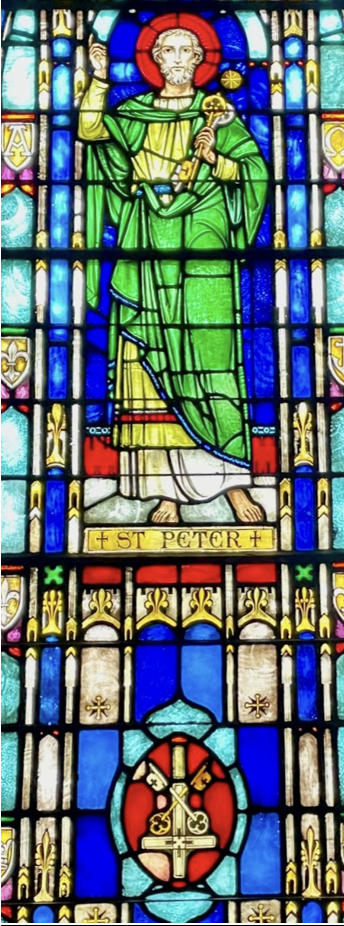
The Feast of the Confession of Saint Peter
Saint Peter is remembered with reverence as the “Chief of the Apostles,” and, especially among Roman Catholic Christians, as the First Pope. He is often given the honorific “The Vicar of Christ” because, he is told whatever he binds on earth is bound in heaven, and conversely, whatever he loses on earth will be loosed in heaven. Therefore Peter’s “Shield and Coat of Arms” usually shows two keys—a key of binding and a key of losing—usually imposed over an inverted (“upside-down”) cross, which was the tool of his martyrdom, for it is said that Peter refused to be crucified upright for fear that people might mistake him with Christ. Saint Peter was martyred in the Circus Maximus in Rome, under the Emperor Nero. His relics, it is said, are under the altar of the current Basilica named in his honor on the Vatican Hill.
Today, however, we do not so much honor Saint Peter’s primacy nor his martyrdom (the Feast of his Martyrdom is on June 29), but rather his Confession: “You are the Messiah, the Son of the Living God!” (Matthew 16:16) This Confession becomes one of the earliest Creeds of the Christian Church; a journey that will eventually give to us the Apostles’, Nicene, and Athanasian Creeds, as the Church seeks to more deeply understand what it means that Jesus Christ is “the Messiah, the Son of the Living God.” Of Saint Peter’s Confession, Martin Luther would say that it is the bedrock of the Church’s Faith and from it the Church, which can never be overthrown, will be built.
In modern times, this Feast Day has come to mark the beginning of “The Week of Prayer for Christian Unity” on the calendars of the Episcopal and Lutheran Churches. This week serves as a chance to opportunity deliberately and fervently pray for the unity of the Christian Church here on earth as it is in heaven. The Church is the Body of Christ (1 Corinthians 12), and there is only “One body and one Spirit…” and “One Lord, one Faith, one Baptism...” (Ephesians 4:4—5). The visible divisions in the Church challenge and defy this unity, causing us to somehow exist as though there are “many bodies” instead of one. So let us pray that the Church might be one in both confession and in deed, for if we indeed confess with our lips that Christ is “the Messiah, the Son of the Living God!” then we ought to pray and work for the unity of his Church, which is the mystical Body of our Lord, Jesus Christ in the world.
Prayer:
Heavenly Father, we pray for your one, holy, catholic, and apostolic Church. Fill it with all truth and peace. Where it is corrupt, purify it; where it is in error, direct it; where in anything it is amiss, reform it; where it is right, strengthen it; where it is in need, provide for it; where it is divided, reunite it; for the sake of Jesus Christ, your Son and our Savior. Amen.
Thursday, January 19:
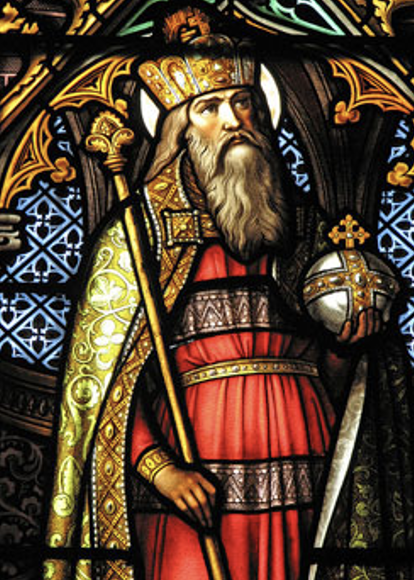
Saint Henry, Bishop and Martyr (1156)
Saint Henry (or Henrik) was born in England, sometime in the early twelfth century. It is said that he became Bishop of the Swedish see of Uppsala in 1152 and accompanied King Eric of Sweden on an expedition to Finland in 1155, with the goal of spreading Christianity among the Finns and establishing the Finnish diocese. After Eric returned to Sweden, Henry remained behind, organizing the Church and preaching the Gospel. In January 1156, he was murdered by an axe wielding farmer named “Lalli” (or “Lawrence”), who, by various legends was either a murderer who had been excommunicated by Henry, a disgruntled farmer who resented his wife’s support of the Church, or a pagan who resented the establishment of the Christian Faith and the cutting down of sacred trees. Whatever the cause of his death, Henry’s martyrdom firmly established the Church in and among the Finnish people and numerous miracles attributed to Henry spread his fame.
Henry’s fame and popularity became centered around the Finnish city of Turku, with the Cathedral there receiving Henry’s relics in the 1300’s. As the Lutheran Reformation took hold in Finland in the sixteenth century, Henry remained popular among the Finns and with Saint Birgitta of Sweden, formed a crucial link between Lutherans and Catholics. Saint Henry’s commemoration was later stricken from the Roman Catholic calendar following Vatican II, but among both Lutherans and Roman Catholics in Scandinavia, Saint Henry remains popular. Henry is commemorated on January 19 on the calendar of the ELCA, a date that was incorporated from the Suomi Lutheran Church (Finnish) that had joined the LCA in 1962.
We know from other parts of our life that shared family members tie us together. There are many popular genealogy sites that offer to help give us a sense of belonging by tracing our family and genetic history. Saint Henry is a common link for both Protestants and Catholics so that, as we trace our “family history,” we can find common relations between us. We come together around Henry, our common ancestor in the Faith. Henry binds us together as well as giving us a heroic example of discipleship that leaves all else behind to follow the call of Christ.
Prayer:
Almighty God, increase the faith and zeal of your Church to desire and work for the salvation of all peoples. Unite us in our desires so that we might seek to work together, for the sake of the Gospel. We give you thanks for the work of your servant, Saint Henry, and pray that his memory might be forever Blessed among us and that his example may inspire us to proclaim the Gospel of Jesus Christ in all that we say and do; through Jesus Christ our Lord. Amen.
Friday, January 20:
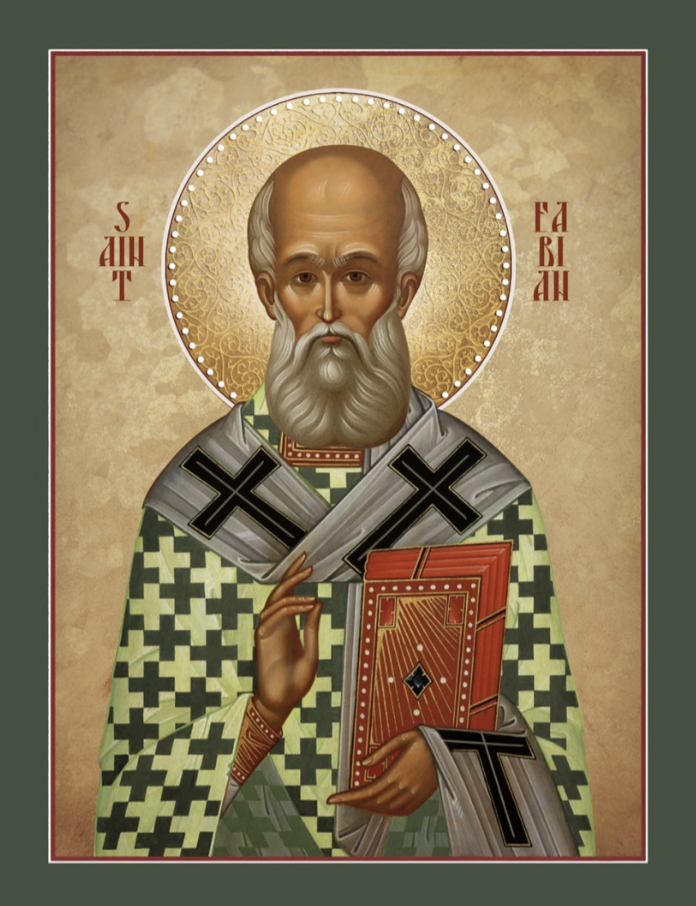
Saint Fabian, Bishop and Martyr (250)
In January of 236, Anterus, the Bishop of Rome and Pope, died, leaving vacant the Seat of Peter. After Anterus’ funeral, an assembly was held to choose his successor. By all accounts, the assembly was chaotic and fractious, and no immediate candidate was apparent to succeed Anterus as Bishop and Pope. However, as is typical in situations where there seems no way forward, God provides.
Fabian was a Christian layman, a farmer, who was in the city of Rome that day tending to business. He had heard the commotion around the Cathedral and, drawn by curiosity as to what was happening, happened to be in the crowd, when a dove flew over the assembly and alighted on Fabian’s head. The entire assembly took it as a sign, and Fabian was overwhelmingly acclaimed to be Anterus’ successor. He was ordained a Deacon, then a Priest, and finally as the Bishop of Rome, an office that he faithfully oversaw for the next fourteen years. His Bishopric was known for its amity and charity—the feud between the Pontians and the Hippolytians was resolved, and both of their bodies were returned to Rome from exile—and it was Fabian who appointed the Seven Deacons of Rome to help oversee the burgeoning diocese. Despite being highly regarded by all, when persecution broke out under the Emperor Decius, Fabian was among the first arrested and martyred, dying on January 20, 250.
Saint Fabian is venerated in the Roman Catholic Church, Orthodoxy, and among the Copts. He is remembered especially for his gentleness and goodwill, but also for his faithful witness in resisting heresy and his willingness to die ahead of his flock. Saint Cyprian remarked that Fabian was “incomparable,” and that the glory of his martyrdom was only befitting the holiness of his life.
Prayer:
Heavenly Father, your Son, Jesus Christ our Lord, is the Good Shepherd who gave his life for his sheep. We thank you for your servant, Saint Fabian, who was faithful in the care and nurture of the flock you entrusted to his care, and we pray that, following his example and the teaching of his holy life, we may, by your grace, grow into the full stature of our Lord and Savior, Jesus Christ, who lives and reigns with you and the Holy Spirit, one God, now and forever. Amen.
Monday, January 23:
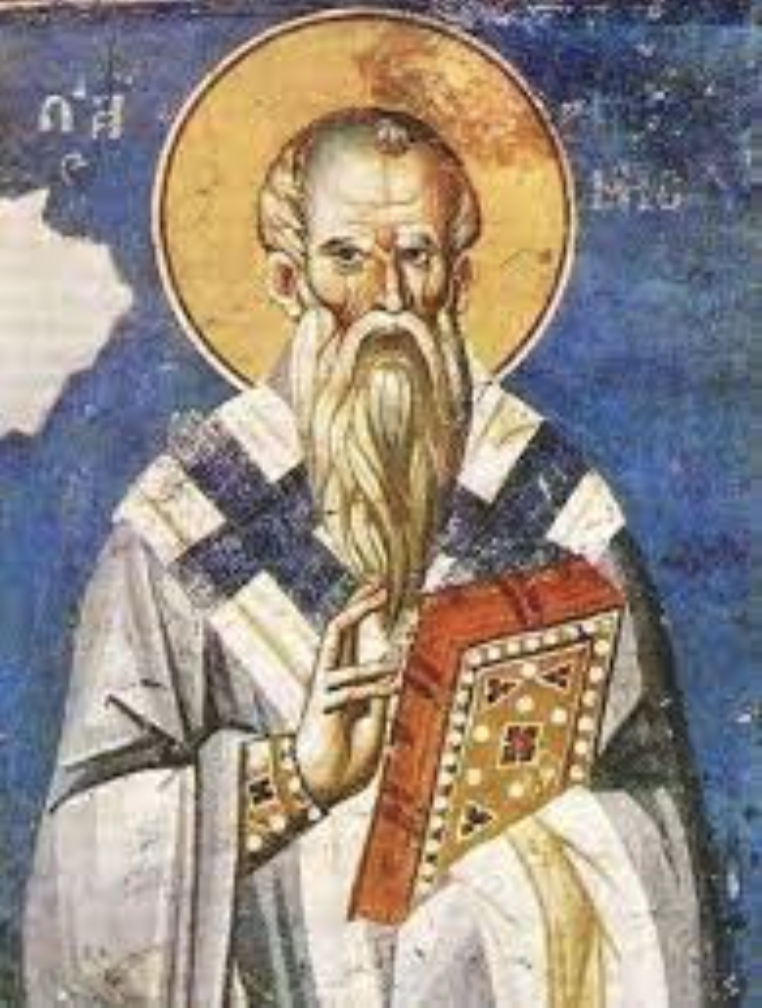
Saint Clement of Ancyra, Bishop and Hieromartyr (312)
Hieromartyr Clement (the Greek word Hiero added to any other title signifies that the person was Ordained) served as the Bishop of the city of Ancyra in modern day Turkey. Born in 258, Clement’s father died when he was an infant and he was raised by his mother who predicted a martyr’s death for him because of his stubborn adherence to Christianity. His mother died when he was twelve, and he was taken in by a kindly woman named Sophia, whom later would also take in other orphans; Clement would help raise these other orphans, instructing them in the Faith and preparing them for Baptism. Clement would progress in the Church, being raised first to Reader, then to Deacon, and, on his eighteenth birthday, he was ordained a Presbyter (Priest). In time, he was Ordained the Bishop of Ancyra, where he was known for his great charity, his wise teaching, and his defense of the Faith against heresy. In 284, a series of persecutions against Christians broke out under the Emperor Diocletian.
Clement was arrested and denounced as a Christian. Dometian, the Governor of the Province of Galatia entreated Clement to forswear the Christian faith and to worship the pagan gods, thereby saving himself from torture, but Clement refused. He was suspended from a tree and his body was whipped and raked with an iron rake, but Clement still held fast to the Christian Faith. Clement withstood many other tortures, to the amazement of those who were subjecting them; God allowed Clement to endure and survive these tortures where other men died. Eventually, Dometian sent Clement bound to the Emperor himself. Further subjected Clement to horrible tortures, but no one was able to kill him nor would Clement yield his Faith. In fact, many were so amazed at Clement’s endurance and his charity to those subjecting him to torture that many came to the Christian Faith having been moved by Clement’s example. Eventually, in 312, Clement’s time for martyrdom came: as he celebrated the Holy Eucharist, he was beheaded by a Roman soldier. This marked the end of the Diocletian persecution and is seen as a miraculous image of Christ’s own sacrifice.
Clement the Hieromartyr reminds us of just how precious Christ’s own suffering and death is for us. In the Holy Eucharist, we partake of Christ’s own suffering and death, just as Bishop Clement did. As the Apostle Paul says, if we are united in Christ in a death like his, we will most certainly be united with him in his Resurrection. Clement withstood years of bondage, suffering, and even death itself, just as our Lord suffered great pains, humiliation, and death upon the holy Cross. In remembering and honoring Hieromartyr Clement, therefore, we remember and honor Christ himself and all who have lived, persevered, and died in Christ.
Prayer:
Almighty God, Heavenly Father, in every age and among every people you have called men and women to give their lives for the Gospel of our Lord Jesus Christ. Inspire us with the memory of the martyrs of the Gospel, especially Saint Clement of Ancyra, whose faithfulness led them in the way of the Cross, and give us such courage that we too might bear full witness with our lives to your Son’s victory over sin and death; through Jesus Christ our Lord, who lives and reigns with you and the Holy Spirit, one God, now and forever. Amen.
Tuesday, January 24:
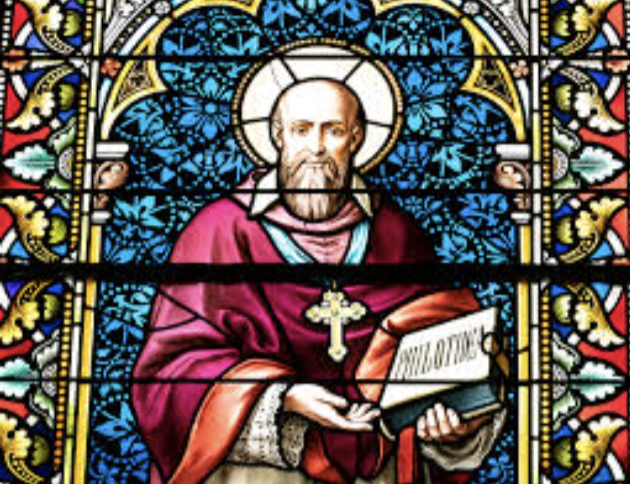
Saint Francis de Sales, Bishop and Doctor of the Church (1622)
Born into a noble family in 1567, Francis de Sales is an interesting study of how the life of Faith can lead us away from all that we know and hold dear as we pursue a relationship with Jesus Christ. Francis should have had a well charted life course: the oldest of six sons, Francis should have inherited his father’s estate, the Duchy of Savoy, and, like Martin Luther, Francis’ father desired that his son become a magistrate. As such, Francis attended the best of French schools through which Francis was exposed to the Capuchins (Franciscans) and then the Jesuits. Attending a theological discussion around the issue of “Predestination,” Francis suffered a personal crisis of faith, convinced of his own unworthiness and damnation. He prayed fervently and became convinced of God’s grace through the words of the First Epistle of Saint John: “God is love.” After receiving his doctorate in Law and Theology, he resolved himself to becoming a Priest, which meant forsaking his family titles and defying his father’s wishes. In 1593, Francis was ordained a Priest and was appointed to the post of Canon of the Cathedral in Geneva.
Geneva, at the time, was in the midst of the Calvinist Reformation and the Calvinists controlled the city and its government. Francis quickly developed a reputation as an effective Preacher; his sermons avoided, for the most part, controversy and he was known for his straightforward manner of preaching. His work forced him into contact with the Calvinists, who on occasion accused him of sorcery, but his calm manner won him much respect. In 1602 the Bishop of Geneva died, and quite logically Francis de Sales was appointed to the See. His motto as Bishop was simple: “He who preaches with great love, preaches effectively.” He wrote many books and pamphlets exhorting a Spiritual Life and Spiritual Direction, including his work “The Treatise on the Love of God.” He was summoned by his brother, the Duke of Savoy, to tour his territory with him, but Francis preferred to lodge in humble surroundings; in 1622 he suffered a stroke while lodging in a gardener’s hut in Lyon, and died on December 28, the Feast of the Holy Innocents. Saint Francis de Sales is commemorated on the day of his burial: January 24.
Our Lord called his Apostles to leave “father and mother” and to follow him. We can see this call clearly in the life and work of Saint Francis de Sales, who must leave his family and even his native country, to work in a hostile area. And yet, Francis de Sales answered that call with great grace, charity, and joy. It would have been easy for him to be angry, resentful, and restive: he could have easily taken such resentment out on his parishioners and the Calvinists who opposed him. Instead, Saint Francis de Sales is best known for his patience, candor, and charity, preaching God’s love to all who would listen and showing that charity in his daily life.
Prayer:
Good and Gracious God, we give you thanks for the example of all the Saints in Light who have striven to do your will and have shown your love in their words and their deeds. We thank you for the example of Saint Francis de Sales, and we pray that we too might be supported in all the days of our lives, so that we too may proclaim your goodness and love to all whom we meet; through Jesus Christ our Lord. Amen.
Wednesday, January 25:
The Feast of the Conversion of Saint Paulmartyr (312)
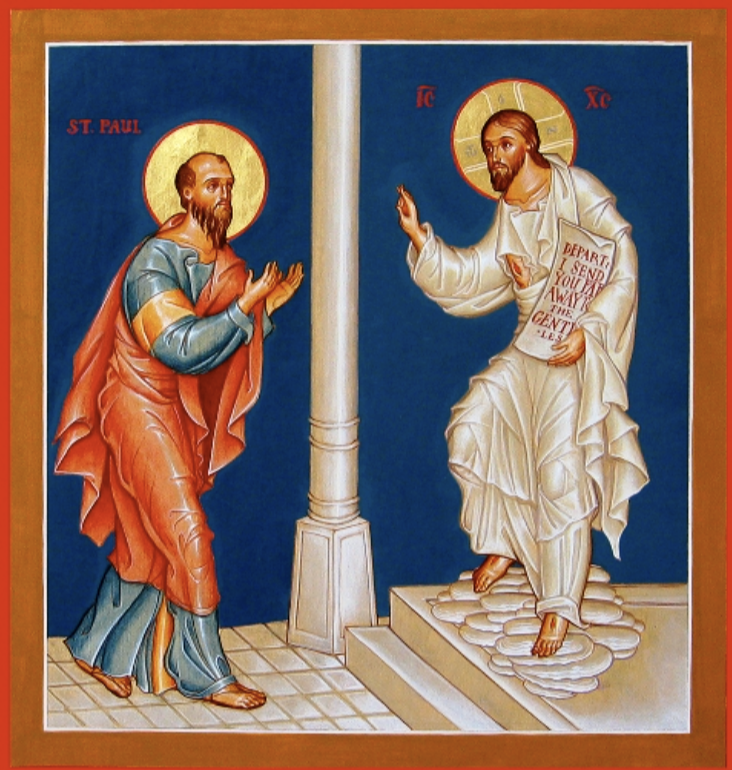
Saint Paul is remembered with great reverence among Lutherans, especially Paul’s writings which featured prominently in Martin Luther’s works: “For by grace you have been saved through faith, and this is not your own doing; it is the gift of God—not the result of works, so that no one may boast.” (Ephesians 2:8—9) Saint Paul also is a living example of how one can be changed through encountering the Lord Jesus Christ. We first meet Saint Paul, known by his given name—Saul (of Tarsus)—in the book of the Acts of the Apostles, when he “approves of” (which can also be read as “supervising”) the stoning of Saint Stephen the Deacon. Later we see Saul on his way towards Damascus, charged to seek out and persecute Jesus’ followers there, but on his way towards Saul encounters the Resurrected Lord who asks Saul why he is persecuting him. Saul is struck blind by this encounter until another follower of Christ, Ananias, comes to Saul, announcing Saul’s healing and reconciliation with the Church. Saul then takes the name Paul as a sign of his new Faith and life in Christ.
Sometimes Protestants are quick to try and pit Saint Paul over and against Saint Peter. We like to try and claim Saint Paul as “ours” and love to rejoice in the story where Paul confronts Saint Peter over his reluctance to share the fellowship of gentile Christians. And yet, we are always bid to remember that Saint Paul and Saint Peter serve the same Lord, Jesus Christ. “One Lord, one Faith, one Baptism…” (Ephesians 4:4—5) Not ironically, therefore, we will celebrate the Feast Day for both Saint Peter and Saint Paul on June 29, when tradition tells us that both were martyred, in the same city (Rome), on the same day. In the very persons of Saint Peter and Saint Paul, we see a living example of the Unity of the Church, even among very different people with a different journey of Faith.
But beyond the “persons” of Saint Peter and Saint Paul, we can rejoice in the very experience of Conversion that we see in Saint Paul today. “Every Saint has a past, every sinner has a future.” That Jesus Christ would come and encounter Saint Paul personally and call him to “deny himself, pick up his cross, and follow me” just as he had called his own Apostles, is good news for us, for if Jesus can change Paul’s heart and destiny, then nobody is outside of his grasp or power. Just as we can see our frailty in the betrayal of one of Jesus’ own Apostles in Judas, so too can we see the magnitude and strength of God’s Grace in the conversion of Saint Paul. Christ Jesus reaches out to his bitterest enemy and, through Grace and the encounter with the Risen Christ, so too does Christ reach out to us, reconciling us to him through the Sacraments and calling us to turn from our persecution of him to a new and holy labor.
Here, as we conclude the Week of Prayer for Christian Unity, may we deny ourselves, pick up our cross, and, with Saint Paul, walk a way that would heal the Church, which is the Body of our Lord, Jesus Christ. Let us seek, not the persecution of other Christians, but continually pray for each other, so that the wounds that we have inflicted upon the Body of Christ might be healed and that charity for one another may grow.
Prayer:
Our Father in Heaven, through the preaching of the Apostle Paul, you established one Church from amongst the peoples. As we celebrate his conversion, we pray that we too may follow his example and be witnesses to the Truth, your Son, Jesus Christ our Lord, who lives and reigns with you and the Holy Spirit, one God, now and forever. Amen.